What to Do With Your First $10,000 and How It Can Transform Your Financial Future
Having $10,000 sitting in a bank account is a milestone that brings a powerful sense of accomplishment. It represents security, independence, and the freedom to make choices without fear. Yet the most important question is not how it feels to have that amount saved, but what someone chooses to do with it. The first $10,000 is the foundation of a person’s financial future, and the way it is handled can either accelerate long-term wealth or stall progress for decades. Used wisely, it becomes a springboard. Left idle, it becomes a missed opportunity.
This article explores why the first $10,000 matters so much, how to invest it in a safe and strategic way, the mistakes new investors often make, and the mindset someone needs to truly benefit from compounding. With the right approach, this initial sum can eventually grow into tens or hundreds of thousands of dollars—and in some cases, even more.
Why the First $10,000 Matters More Than Most People Realize
For many people, reaching the $10,000 mark is the first time they feel financially secure. It becomes easier to walk away from an unhealthy workplace, a stressful living situation, or a relationship that is draining. The money provides a sense of calm and optimism, and more importantly, it builds confidence. Once someone saves that amount, they tend to trust their ability to make smart financial decisions and stick to the habits that helped them reach that point.
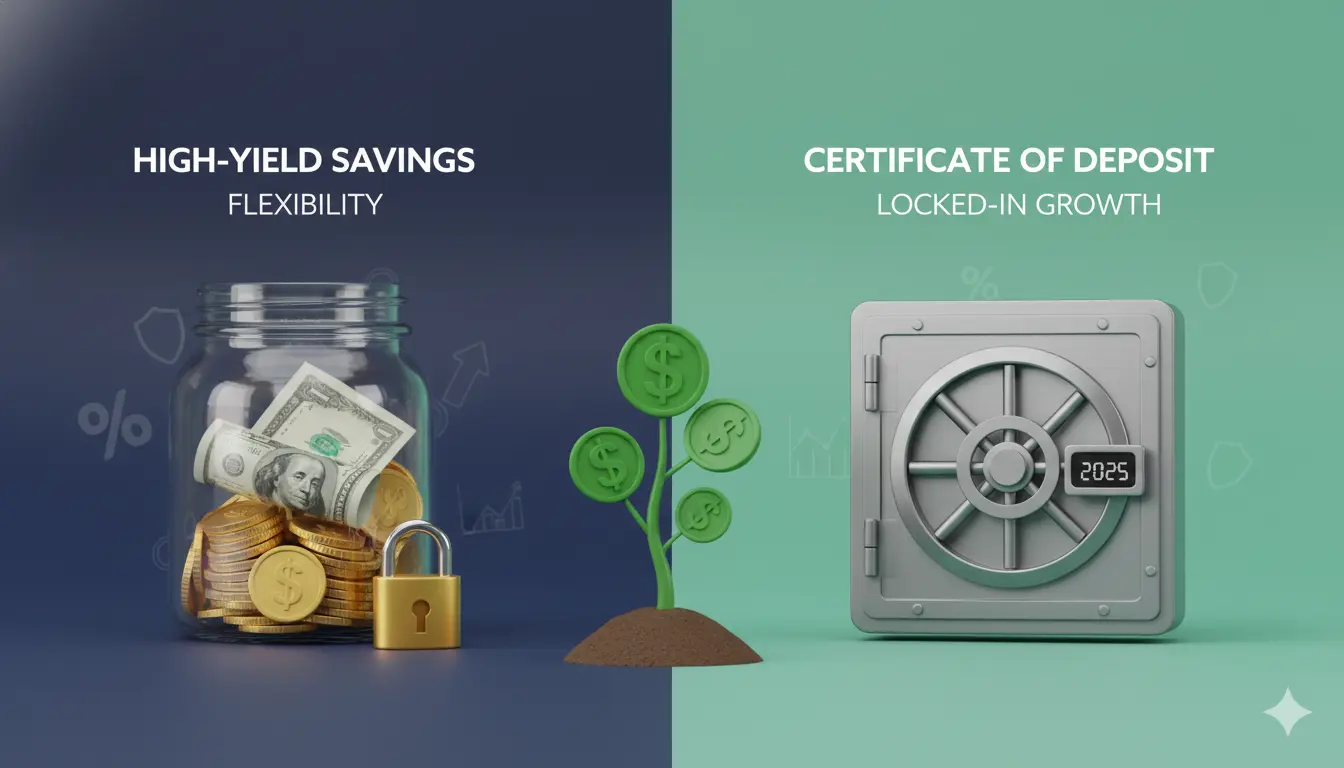
But while that security is valuable, the most important question is whether the money is being used effectively. Keeping all $10,000 in a bank account may feel safe, but savings accounts—especially in today’s environment—tend to offer modest returns. In many places, interest rates hover around 4%, with some regions offering up to 5% for limited periods or capped balances. Those returns barely keep up with inflation, and in many cases, they fall short entirely.
By contrast, a globally diversified investment portfolio historically averages around 8% per year. Over long periods, that difference compounds dramatically. If $10,000 grows at 8% annually, it becomes more than $21,000 after ten years. In a 4% savings account, it remains under $15,000. Nothing about the person’s life changed except where the money was stored, yet the difference in outcome is massive. This is where the power of compounding begins to reveal itself.
Inflation creates another challenge for savings accounts. While earning 4% might feel acceptable, the cost of living naturally rises. Everyday essentials—groceries, utilities, housing, transportation—become more expensive over time. Historical inflation calculators show that items costing $10,000 in 2015 would cost significantly more just a decade later. Going further back, a $10,000 purchase in 1990 would cost well over double today. In other words, money kept solely in savings loses purchasing power whether someone notices it or not.
Investing, however, grows wealth in a way that tends to outpace inflation. It protects the value of someone’s money and builds on it. Compounding then takes over, transforming small steps into extraordinary progress. In the early years, growth seems slow. The first year’s return on $10,000 at 8% is only $800. But by the fifth year, the investment is nearing $15,000. By year seven, it passes $17,000. By year ten, it reaches more than $21,000, and by year twenty, it grows to around $46,600—even without adding anything beyond the original $10,000. This is the effect of compound interest: returns generate their own returns, and the cycle becomes more powerful with every passing year. That is why starting early, even with modest amounts, matters so much more than chasing perfect timing.
The Smartest Way to Begin Investing Your First $10,000
Before investing a single dollar, it is essential to create a strong financial foundation. This means keeping enough cash in an emergency fund so market fluctuations never force someone to withdraw investments in a panic. Many financial educators recommend three months of living expenses for an individual, six months for those supporting a partner or children, and up to nine months for those who prefer an extra layer of security. Any money needed for the next one to three years—such as travel, a new car, or a home deposit—should also remain in cash, not in investments. This prevents short-term needs from clashing with long-term strategy.
Once this safety net is in place, the next step is to take advantage of workplace retirement plans. Many employers match a portion of their employee’s contributions, which is essentially free money. No investment will reliably outperform a guaranteed return provided by an employer match, so maximizing this benefit is considered one of the smartest first steps.
After that, tax-advantaged investment accounts become extremely valuable. In the United States, these include accounts such as Roth IRAs or Traditional IRAs, which offer tax-free or tax-deferred growth. These accounts can dramatically accelerate long-term returns by reducing the amount of money lost to taxes. Once contributions have been maximized in these accounts, a general investment account can be opened for any additional investing.
Some people consider beginning with real estate instead of stocks, but property usually has a much higher barrier to entry. Saving for a deposit can take years, and once purchased, property brings maintenance costs, taxes, repairs, and the responsibilities of being a landlord. While it can be an excellent investment for the right person, it is often far less accessible than the stock market, where modern investment platforms allow someone to begin with very small amounts of money. For beginners, stocks and diversified funds provide a simpler, more passive, and more flexible entry point.
When deciding what to invest in, beginners benefit from keeping it simple. Broad, globally diversified index funds are often recommended because they spread risk across hundreds or thousands of companies. Funds such as an S&P 500 index fund or a total world equity fund provide exposure to different industries and regions without requiring constant monitoring. One important factor to consider is the fee charged by the fund. Even a seemingly small difference in annual fees can create a huge gap in returns when compounded over several decades.
The Common Mistakes That Cost New Investors Thousands
Even with the best strategies available, many new investors fall into predictable traps that can drastically reduce their long-term gains. One of the most common mistakes is procrastination. Many people sit on their savings for years because they feel nervous or overwhelmed. They convince themselves that they need to read more books, take more courses, or wait until they “understand investing better.” Meanwhile, time passes, and the power of compounding is weakened with every year that money stays idle. Someone who invests $10,000 at age 35 will see it grow, but someone who invested the same amount at age 25 will see dramatically more by age 60—often tens of thousands more.
Another common mistake is chasing trends. New investors frequently get swept up in excitement, believing they’ve discovered the next big thing in stocks or cryptocurrency. Social media amplifies this impulsiveness. Psychologists refer to this as the Dunning-Kruger effect, where people believe they understand more than they actually do. Someone may learn the basic ideas behind investing and suddenly feel confident enough to choose individual high-risk assets. If they want to experiment with individual stocks, it should only be done with money they can afford to lose—not with the funds meant for long-term wealth building.
A third mistake involves selling during market downturns. When markets fall, emotions rise, and many people rush to withdraw their money, locking in losses. Those who stay invested or continue investing during downturns often benefit the most once the market recovers. Historically, long-term investors who remained invested in broad index funds for 20-year periods almost never ended with a loss. Market dips are temporary, but selling during them turns temporary declines into permanent losses. The best way to avoid panic selling is to have emergency savings ready and to invest only money that will not be needed in the short term.
Building Wealth With Confidence and Patience
The journey to financial independence does not begin with huge sums of money. It begins with the first $10,000 and the decisions made around it. A solid emergency fund ensures stability. Paying off high-interest debt prevents progress from being undone. Making full use of employer retirement plans and tax-advantaged accounts accelerates growth. Automating contributions keeps investing simple and eliminates emotional decision-making. And understanding that wealth grows slowly at first—and rapidly later—helps investors stay patient long enough to benefit from compounding.
The process may not be exciting, but it is powerful. Wealth is built quietly, consistently, and over time. With the right foundation and habits, that initial $10,000 becomes more than just a savings milestone. It becomes the spark that ignites an entire lifetime of financial growth.